
 Nia Ames
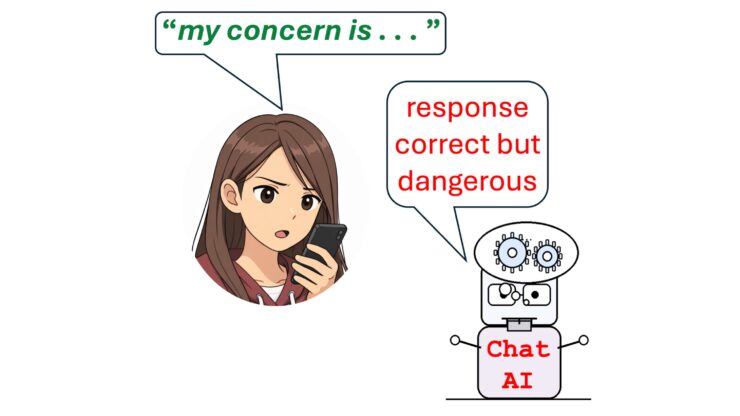
Artificially generated election media and misinformation is harder to identify than ever, researchers say, and the inaccuracy in particular of free AI chatbots could dissuade some citizens from voting.
Different AI platforms provide varying degrees of accurate election information, said Neil Johnson, head of the Dynamic Online Networks Laboratory at the George Washington University, which studies the risks of AI.
The most accurate and highly developed AI models are the ones that are behind a hefty paywall, making them inaccessible to the majority of the public.
“I mean, it’s too expensive. And so they may be using something that’s actually still very rough around the edges,” Johnson said, referring to the general public.
Artificial intelligence chatbots are used by 13% of Americans to get their news, according to a report from the Pew Research Center. That percentage skyrockets to 60% when including the usage of AI search engine summaries.
In the early days of publicly accessible AI, misinformed AI generated responses were ludicrously incorrect, said Calli Schroeder, director of AI and human rights at the Electronic Privacy Information Center. Nowadays, its mistakes are much harder to spot.
“It can give you very convincing stories that might have an element of truth,” said Johnson.
How AI can misinform voters
Some AI platforms, like ChatGPT, have an 89.3% success rate of answering generically prompted election questions, according to a report from the Institute of Strategic Dialogue. But the report found that social media AI platforms like Grok fail to accurately answer over 40% of election focused questions.

AI chatbots may provide incorrect information on voting deadlines, requesting an absentee ballot, or voting procedures online versus in-person, said Thessalia Merivaki, distinguished professor of government at the Thomas St. Foley Institute, a public policy focused academic center.
“Depending on which platform you’re using or how you’re phrasing a question, it’s almost a coin flip whether you’re going to get accurate information or not,” said Schroeder about using AI for questions concerning elections.
Because AI pools its information from the internet and social media, misinformation spreads like wildfire across internet platforms, making it even harder to discern what’s real, Johnson said.
Notably, in Oct. 2026, an AI online ad falsely claimed that Senate candidate James Talarico, D-TX, was admitted to a mental health facility for inpatient treatment.
“You’re primed to believe inaccurate information if it aligns with your worldview and with your political stance,” said Schroeder.
Zara Nesar, a political science major at American University, said she’s skeptical of AI, and doesn’t trust it to give her accurate information in her election research. It’s hard to tell what information is biased, she said.
Source reliability has lessened alongside the ease of creating falsified and manipulated media, said Professor Aram Sinnreich, author and graduate director of communication studies at American University.
No federal standard
While 30 states have laws in place to protect against AI use in elections, there is no federal law, Schroeder said.
“We cannot just be passive consumers of information,” Merivaki said.
But people use AI for convenience, said Johnson. Trying to separate AI falsities from real news requires high levels of effort that voters may not have the time or motivation for, he added.
He warns that the resulting public fatigue could dissuade the public from showing up to the polls during this year’s midterm elections.
“It’s just that, in the end, they don’t know what to believe,” Johnson said.
 Isabella Barias

 Albina Yeromina

 Alyssa Summers


Add comment