
 Jacob Saucier
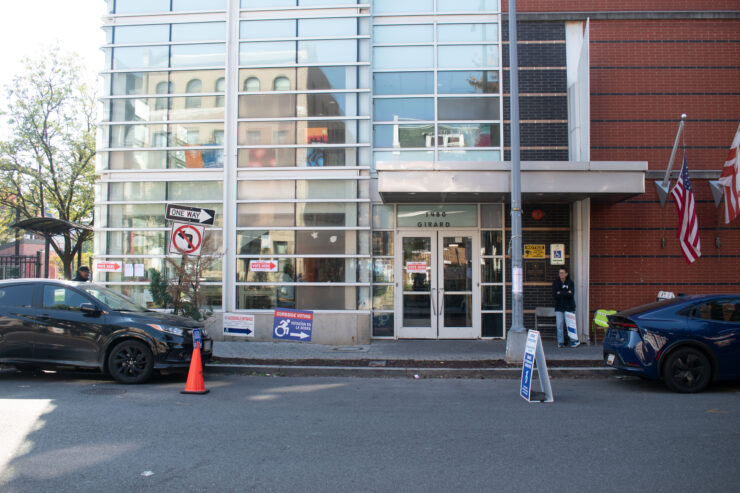
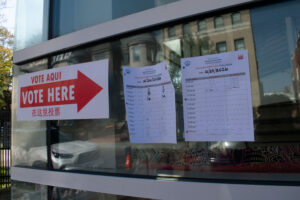
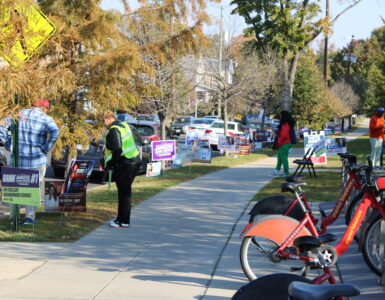
Early voting for the November election kicked off Monday, Oct. 26, and Columbia Heights residents are heading to the polls.
For some voters, the election offers a chance to address everyday issues impacting the neighborhood, while others are focused on the country’s political direction.
Voter Darnell Boat said he was concerned with neighborhood safety, specifically the presence of teenagers riding electric bikes and scooters around the community.
“I feel as though, like, certain youths shouldn’t have easy access,” he said.
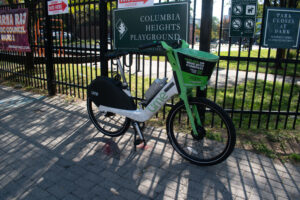
Boat said he was worried about potentially hitting a reckless e-biker in traffic or the nearby wooded areas.
His comments reflect broader questions surrounding public safety in Ward 1, where residents must navigate heavily trafficked streets shared by pedestrians, cyclists, and motorists.
Rather than eliminating the vehicles from the neighborhood, Boats said he wanted officials to better manage their use.
“Don’t get rid of it, just clean it up,” Boats said.
Other voters were more concerned with national politics and how local candidates have responded to the Trump administration.
Tyler, a Ward 1 resident who declined to give his full name, said he paid particular attention to candidates’ reactions to the deployment of the National Guard in Washington and other actions taken by the president.
Tyler’s concerns reflect the relationship between federal and local politics in the district, where decisions made by the federal government can have immediate and lasting consequences for residents.
National politics were not Tyler’s only consideration. He also supported a proposed ban on foie gras, a food product made from the liver of ducks or geese that has attracted criticism from animal welfare advocates.
On the D.C. ballot this year is Initialtive 86, which, if passed, would ban foie gras and other products made from force-fed birds.
Tyler said he had been more interested in the primaries. His opinion is not uncommon in the district, where the Democrat primary is often more contentious than the main election.
For Valerie, another early voter who also declined to give her full name, the election was primarily about opposing the Republican Party.
“Mostly I just care about getting out Republicans,” she said.
Unlike Tyler, Valerie was focused strictly on partisan voting and did not share any opinions on local issues.
Not every voter approached the election primarily through the lens of national politics.
One older voter, who declined to be identified, described housing as a central issue facing Washington residents and his key focus.
Housing affordability is a constant issue for District residents, particularly in neighborhoods like Columbia Heights, where rising costs and redevelopment have gentrified the community for decades.
Affordability concerns also underscore the importance of local government’s power to control housing development, zoning, and aid programs that can affect longtime residents and newcomers alike.
Adam Green, who lives near Howard University, said he was looking for candidates willing to challenge the status quo and confront corruption in District politics.
“I care about bold systemic change, people who will take on corruption, people who are not political insiders and who are also competent,” Green said.
Green said a proposed 10-story apartment redevelopment of a park across from his home was his “pet issue.”
He said the development would tower over existing two-story bodegas and that many residents in the surrounding community opposed the proposal.
For Green, the issue influenced his choices even in smaller local races, including for advisory neighborhood commission positions.
“I honestly just wanted someone fresh,” Green said.

 Isabella Barias
 Alyssa Summers
 Birchard Allen


Add comment