
 Ashayla Byrd
Ward 8 residents and community members say that wages are not increasing at the same pace as housing, grocery, and utility prices and that the nationwide affordability crisis deeply affects their day to day life.
These community members say the tension between stagnant wages and rising costs is forcing them to make difficult choices about their spending priorities, including whether to pay for food or bills.
The DC Voice reported that about 90% of ward 8’s residents are Black with the lowest median income of any ward in the district.
The National League of Cities also reported in October that groceries are up 32%, childcare is up 30%, and utility costs are up 40%.
Meanwhile, the Urban Institute reported that 49% of American families cannot afford the true cost of living. The institute also said that affordability issues are spreading beyond traditionally high-cost areas and into previously low-cost regions and metropolitan areas.
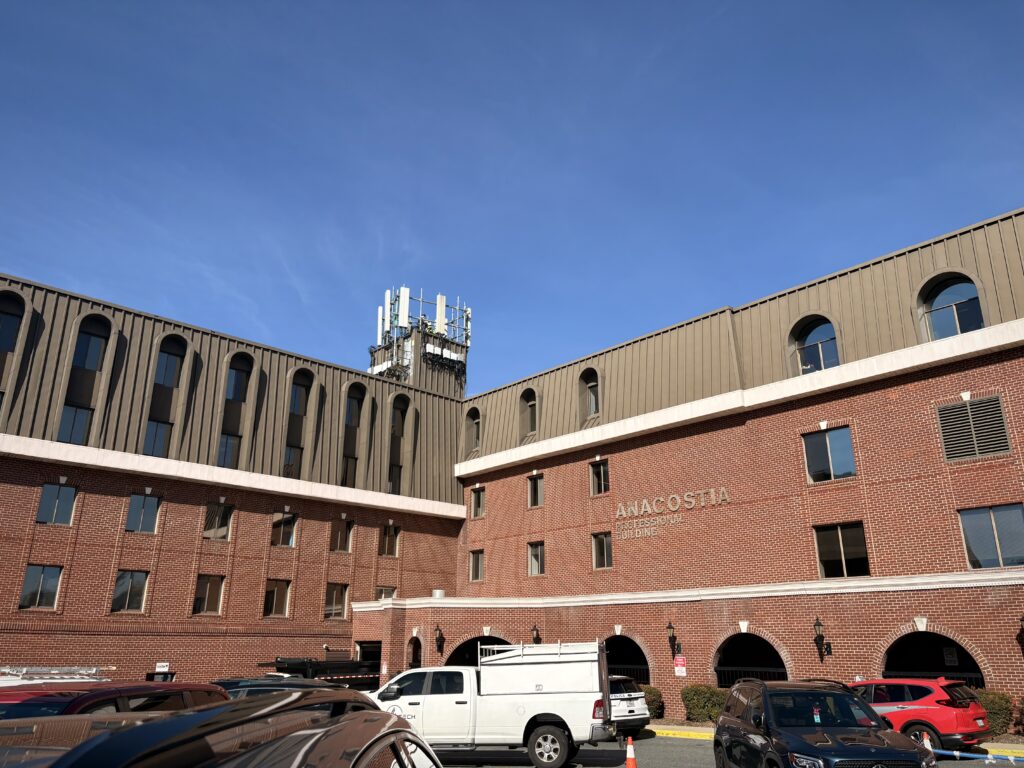
Morgan Yearwood, a Maryland resident and employee at D.C. Housing and Community Development in historic Anacostia, said that people come to her job daily because they can’t access affordable housing.
“I’m struggling to find housing, and I work here,” Yearwood said. “The cost of living is going up, but yet, the pay of each job is not. In fact, it’s lower than it should be.”
“It’s hard when you’re living paycheck to paycheck,” Yearwood said.
Yearwood added that she finds it difficult to save money to buy her own home in the future. She said she lives in an apartment that is expensive without factoring in the added expense for utilities, parking, and city taxes.
Yearwood said that she thinks the federal government should try to increase affordable housing, restore funding for the Affordable Care Act to make healthcare more accessible, and restore SNAP benefits to the citizens that need them.
Wendy Braxton, D.C. resident of over 40 years and special security officer, said she has noticed a shift in her cost of living and the lack of affordable housing in the area. She added that more contracts with housing developers have been executed, but the options are still limited.
Braxton said that more opportunities are reserved for residents with housing vouchers that meet a certain income bracket. She said that since she does not receive a housing voucher, she finds it more difficult for her to receive local or federal support.
“I’m still supposed to be able to pay the utilities and the other bills, but the voucher doesn’t cover that,” she said.
“So am I supposed to quit my job and not work in order to get a voucher? Or do you help out a person that you see is trying?” Braxton asked.
Braxton said that in addition to the lack of affordable housing in D.C., she is concerned with the rise in grocery prices when wages are not increasing.
She said that the federal and local government should work together to lower the price of groceries in Ward 8 and provide greater access to fresh produce at a more affordable price point.
Lamont Mitchell, chairman and chief operating officer of the Anacostia Coordinating Council and a D.C. resident of over 70 years, said he has noticed longstanding challenges with health and human services, income, poverty, and social services most acutely.
Social, economic, and geographic all play into the fact that Ward 8 has the greatest income disparity and Ward 8’s majority-Black status impacts the challenges that it continues to face, Mitchell said. Residents often compete with the rising cost of living across several aspects of their life, often having to sacrifice one aspect of their quality of life to fund another, he added.
“It is not their priority to help socially challenged communities across this country, whether they be Appalachia or Anacostia doesn’t make a difference,” Mitchell said of the federal government.
“If the Congress turns over today…we could begin to rectify some of the Draconian changes that have come about in the last year,” Mitchell added.
Andrea Davis, a native Washingtonian and Advisory Neighborhood Commission 8A03 commissioner, said over 30% of Ward 8 residents live in poverty, and that number increases to 41% for children. “One of the biggest mistakes that people do—they’re treating poverty like an individual failure rather than examining the policies and the economic conditions that have contributed to it,” said Davis.
“I think the federal government can offer tax incentives for regular, everyday people instead of the rich. This Big Beautiful Bill does nothing for the everyday person,” Davis said.
The Trump administration’s One Big Beautiful Bill Act, a large scale federal tax and spending statute enacted in 2025, drives economic growth for high-earning businesses and increases border enforcement. The OBBBA also rolls back green energy tax credits and reduces $1 trillion in spending across healthcare, federal food assistance programs, and federal student loan programs.
Mental health and substance abuse issues are on the rise in ward 8, Davis added, and she said that it is directly related to the nationwide affordability crisis.
“Until someone actually pays attention, does an assessment, and gives the attention that is needed over here, the neighborhood is falling behind, and…it’s failing,” Davis said.
 Jacob Saucier

 Birchard Allen
 Makyla McLeod


Add comment