
 Jacob Saucier
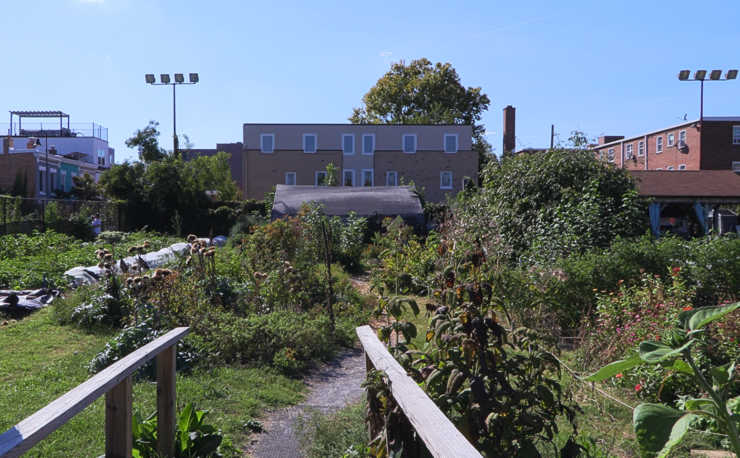
Six local chefs will gather at a half-acre farm in LeDroit Park on Thursday, turning produce grown in the middle of the District into farm-to-table dishes for a fall fundraiser.
A Night on the Farm kicks off a season of events at Common Good City Farm as the organization prepares for community-centric giving events for the approaching holidays.
The Oct. 8 fundraiser will be followed by a free family Halloween celebration on Oct. 31, a Thanksgiving event distributing turkeys and groceries on Nov. 20, and an end-of-year Holiday Fest on Dec. 12.
The events are part of the urban farm’s broader efforts to make fresh food accessible while strengthening its relationship with the surrounding community.
Common Good runs a “pay-what-you-can” farm market and treats food as a human right, Executive Director Joya Wade said.
The organization is trying to make money “as obsolete as possible,” said Wade. “Nobody’s turned away due to lack of funds,” she said.
Common Good is located on V Street NW in the northwest corner of the Park at LeDroit. The farm is next to the LeDroit Park Community Garden, which is fiscally sponsored by Common Good. The LeDroit Park neighborhood is located immediately south of Howard University’s campus in Pleasant Plains and within Ward 1.
“Acknowledging that this was all plantation land, this is good cultivating farmland,” said Wade, referencing the Potomac region’s agricultural history and the District’s historical reliance on slave labor, examined further in this article by the White House Historical Association.
The farm grows about 4,500 pounds of fruits and vegetables each year, which is primarily distributed at the farm, Wade said. Customers can receive up to $30 worth of produce and other groceries regardless of their ability to pay. The Wednesday Farm Market runs from the beginning of May until the end of October each year and is open from 3:30 p.m. to 6:30 p.m.
The farm also operates a 24-hour community pantry stocked with rescued food that otherwise could have been composted or thrown away.
The F.R.E.S.H Fridge & Pantry is located in a shed directly outside of the farm’s gates facing the center of the Park at LeDroit for public access. Wade said the farm had rescued about 6,000 pounds of food through its partnership with DC Food Rescue.
Model targets low food access neighborhood
Common Good sits between public housing and increasingly expensive homes in a neighborhood that has undergone significant change. Wade said the farm is aware of urban agriculture’s reputation as a symbol of gentrification, adding that the farm works to ensure longtime residents know they are welcome.
Matt Fay, the advisory neighborhood commissioner for ANC1B01 representing LeDroit Park, said the relationship between the farm and surrounding community has grown closer over the past three to four years.
“The people who are leadership and work at the farm have made a bigger effort to outreach to the community,” Fey said, adding that, “the community has definitely responded.”
Wade said physical access to grocery stores is a challenge for some residents surrounding the farm. She pointed to a D.C. Health standard that considers residents farther than a 10-minute walk to a grocery store as having difficulty with food access, saying many people the farm serves live farther away.
The Whole Foods on Florida Avenue NW is the closest major grocery store to Common Good, about a 14-minute walk from the farm, according to Google Maps. However, Wade said that proximity does not necessarily make it accessible to every resident, particularly those who cannot afford to regularly shop there.
Fay said the neighborhood is not a food desert. He pointed to the nearby Whole Foods and grocery stores farther west near the U Street and 14th Street corridors, while noting that options become more limited moving east toward North Capitol Street.
However, Giant Food on 7th Street NW and the Trader Joe’s on 14th Street NW are both more than a 20-minute walk away from the farm, according to Google Maps.
Fay said the larger issue is whether residents can afford the food available to them.
“The proximity of a grocery store doesn’t necessarily solve a lot of the food scarcity issues because you still have a lot of people who don’t have access to the financial resources to be able to purchase food,” Fay said.
Wade said Common Good’s pay-what-you-can market model aims to assist with both access and affordability. Customers can receive up to $30 worth of fresh produce and other locally sourced groceries without being required to pay, allowing the market to serve residents regardless of what they can afford at the grocery stores accessible to them, she said.

During the COVID-19 pandemic, grant funding allowed the farm to distribute food for free. When that funding model became unsustainable, the farm developed the current system as a middle ground between free distribution and a traditional farm stand, Wade said.
Customers are not required to pay, but those who can contribute help support the market.
The farm also accepts benefits including SNAP, WIC and Produce Plus, a D.C. program that provides eligible residents with money for fresh produce.
Wade said the model saved customers about $20,000 last year.
Urban grown nutrition
Wade said that she believes Americans should have greater access to fresh and nutritious foods, rather than relying on affordable but highly processed fast foods.
“You really have to go outside of yourself and put in the effort to not eat a standard American diet,” Wade said.
Urban gardening, particularly through organized programs like Common Good, can provide important access to nutritious food said Oyonumo Ntekim, a physician, registered dietitian and associate professor of nutritional science at Howard University.
“Consuming nutritionally dense food prevents deficiencies that interfere with growth” and builds key coenzymes that keep the body functioning healthily, Ntekim said.

People should be combining different foods to get all the nutrients the body needs, said Ntekim. For example, cereal grains (wheat, rice, oats, etc.) lack essential amino acids and should be combined with legumes as is common in many Caribbean dishes, he said.
“People should be consuming as much nutrient-dense food as possible,” he said.
Certain vitamins and amino acids are susceptible to intense heat and PH changes and are often lost when processed, which makes fresh produce a valuable source of nutrients, he added.
Ntekim said he believes more people, particularly youth, should try urban gardening. He said he tends a small garden of medicinal herbs to ensure he has access to quality ingredients for his research.
Common Good faces unique challenges trying to provide healthy and nutritious food in an urban environment at scale.
The farm is organic and doesn’t use pesticides, which can make farming challenging, said Wade, and crops have struggled against the weather and insects this year, she added.
“We have an aphid issue. They took out our cucumbers,” Wade said. “We’re kind of at the mercy of nature,” she added.
The farm has a greenhouse where plants start growing before they are moved to other beds. Wade said she hopes Common Good is able to add a heating element in the future to grow produce year-round.
Education programs and upcoming events
Food distribution is only one part of Common Good’s work.
The farm runs educational programs for children, teenagers and adults, including after-school programming and classes in regenerative agriculture. The farm also seeks to build and support community through its free events while managing the financial realities of operating an urban farm, Wade said.
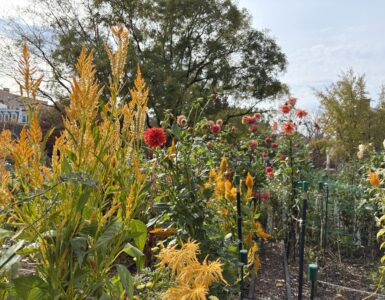
The property was once a baseball field, Wade said. Today, about a quarter-acre is used for food production, with vegetables, fruit, herbs and an orchard demonstrating how much can be grown in an urban space.
“We really show what can be done in a small space,” Wade said.
Wade said the farm’s regenerative agriculture program teaches participants farming practices that restore soil health rather than deplete it with traditional, extractive farming methods, while other programs give young people hands-on experience growing food.
Last year, 35 people graduated from the regenerative agriculture program, and the farm also hires and trains about 25 teenagers each year through a six-week summer program. Common Good’s LEAF program—which stands for Learning for Environment, Agriculture and Food—encourages elementary-aged youth to tend to a designated Youth Garden and prepare meals with their harvest.
“I think that the long-term impact is always going to be anchored by our educational programming because that is not only giving somebody a fish, but also teaching them how to fish,” Wade said.
Some events have grown directly from people who participated in the farm’s programs. Wade said the farm’s recent salsa night on Sept. 26 was originally proposed by a participant in Common Good’s regenerative agriculture classes.
“I love that a student had an idea, came to us and was able to make an event that we still host today,” Wade said.
Events are hosted under a pavilion at the back of the farm. Common Good announces events on its website. Prospective attendees can buy tickets and register for the farm’s free events on Eventbrite.

The farm’s fall calendar emphasizes bringing people into the space.
A Night on the Farm, scheduled from 6:30 to 8:30 p.m. Oct. 8, will feature six local chefs: Emily Baran, head chef and partner at Moreland’s Tavern in Sixteenth Street Heights; Armani Johnson, former executive chef of ABC Pony in Navy Yard and creator of the I Am A Sandwich pop-up concept; Chekesha Rashad, executive chef and owner of Eatopian Eats in Edgewood; Matthew Gaston, founder and head chef of the Eat Sapphire hospitality brand; and local chefs Sandra Paul-Blanc and Lubaba Yemer.
The chefs will prepare food using ingredients grown on the Common Good City Farm. The menu consists of White Bean ‘Cassoulet,’ Smoked Carrot and Eggplant Tamales, Thai Root Vegetable Curry, Haitian Rice and Beans, Macaroni & Cheese and Roasted Chicken. A local bartender will also be making mocktails from farm ingredients.
Tickets for A Night on the Farm are sold in recommended pricing tiers based on a buyer’s financial situation. The suggested price is $95, with discounted and higher-priced tickets available for purchase. Wade said the farm also sets aside special invite tickets for community members who can’t afford to pay.

Following events shift toward free community programming. Fall-O-Ween on Oct. 31 will offer a family-friendly Halloween celebration with free food, activities, and a donation-based Sangria bar.
At Thanks Fest on Nov. 20, the farm plans to distribute turkeys and groceries ahead of Thanksgiving, said Wade. Holiday Fest will close out the year on Dec. 12.
Funding and operations
Roughly half of Common Good’s operating funds come from federal and local government grants, with private foundations, individual and corporate donations and earned revenue making up the rest, according to Wade. Activities such as the farm market, private events, tours and corporate volunteer programs account for only about 6% to 8% of revenue, she said.
At the ANC1B monthly meeting Oct. 1st, the commission unanimously voted to approve a grant for $500 for pumpkins and art supplies for the upcoming Fall-O-Ween event. Fey said the commission has been sponsoring Fall-O-Ween for years.
The farm also faces challenges unique to growing food on city-owned land.
Wade said the farm’s water can be shut off before the first frost, sometimes in October or November, because Common Good depends on the D.C. Department of Parks and Recreation for utilities. In such a case, the farm has to rely on captured water for farming and may have to purchase additional water for its kitchen and events, she said.
Despite those constraints and uncertainty surrounding future funding under the current administration, Wade said the farm hopes to eventually acquire another plot of land and expand its work.
For now, she said, the goal is to keep the existing programs running while continuing to make nutritious food available to people who need it.
“I want us to have more ways for people to access food easier, and I want that food to be as affordable as possible while supporting the farmers who are growing it,” Wade said.

 Isabel Del Mastro

 Terrance Williams


Add comment