
 Deona Easterson
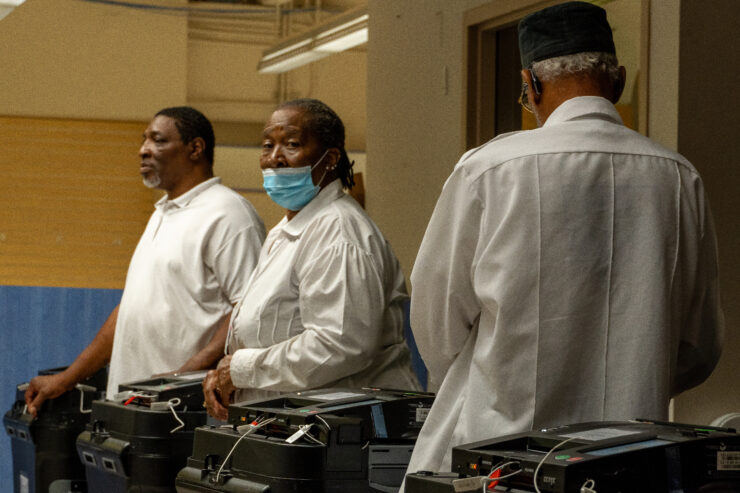
Different cities, different realities, yet voters from Detroit to D.C. went to the polls Tuesday to address one common concern: the rising cost of maintaining an ordinary life.
For some voters, feeding their family and filling their gas tank has been a struggle. For others, medication costs and healthcare premiums are not accessible anymore.
The 2026 election brought those concerns into the national political conversation.
With Democrats seizing control of both houses of Congress after campaigning heavily on the affordability crisis many Americans have endured, the question now is whether they can turn campaign promises into tangible economic relief.
The economy emerged as the leading issue in the 2026 elections, with 84% of registered voters identifying it as very important to their vote, according to an October Pew Research Center survey. The concern crossed party lines, with 88% of Democratic supporters and 82% of Republican supporters ranking the economy as very important.
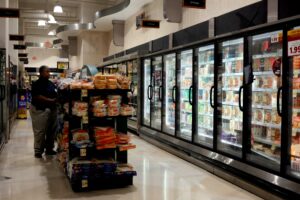
Exit polling conducted during the election also found that voters across political parties were concerned about affording groceries, gasoline, and utilities.
Zooming in to a battleground state
In battleground Michigan, where Democrat Abdul El-Sayed defeated Republican Sen. Mike Rogers in one of the most closely watched Senate races, voters reflected the same financial pressures influencing their decisions at the ballot box.
Ryan Holland, a Detroit mother of two and United Auto Workers member employed at one of Michigan’s Big Three automakers, said the cost of necessities has become astronomical.
Holland said she now pays $20 for a package of hamburger meat and $15 for bacon, nearly double the $8 she paid for bacon just months earlier.
Gas prices have also taken a toll. Earlier this year, Holland said she could fill up her Jeep for $60. Now, she pays $80.
“You’re hindering humanity from continuing because of the price of everything,” Holland said.
But for some Michigan voters, working tirelessly hasn’t made it any easier to pay their bills, bringing into question whether working hard can still provide financial security.
Crystal Hill, a 42-year-old Detroit resident who underwent a kidney transplant, sometimes works 12-hour days, seven days a week, yet struggles to afford the medication she must take for the rest of her life that prevents her kidney from failing.
“I’m exhausted every day,” Hill said.
Hill said she takes great pride in hard work, adding that you should have to work for what you want in life, but it now requires sacrifice for her.
“I don’t think ‘working hard’ should be this hard. It shouldn’t take you away from family or rest,” Hill said. “You should be able to take a vacation.”
One Michigan hairdresser and mother of three, Sindus Segmen, said financial hardship has stolen some of her independence.
Since losing her husband to cancer 20 years ago, Segmen said she has struggled financially as a single mom, making it increasingly difficult to support herself. She said she now relies heavily on her kids to help support her, including using their vehicles.
She blamed President Donald Trump’s policies for her economic difficulties.
Segmen voted for Democrat El-Sayed in both the primary and general elections.
Segmen said the election represented an opportunity for change after years of financial struggle.
She said El-Sayed’s victory will send a new voice to Washington, championing the slogan “Money out of politics, money in your pockets, and Medicare for All” throughout his campaign.
He gave voice to voters struggling to keep up with medical costs and everyday living expenses, spotlighting struggles both Hill and Segmen said they have been experiencing.
Segmen said her health insurance premium increased by $100 this year, making it increasingly difficult for her to support herself. Echoing this, Hill said, “basic necessities are hard to come by.”
While voters struggle to pay for groceries, billions have been invested in the 2026 midterms, driving El-Sayed’s “money out of politics” proposal. Hill said this plays a part in the financial struggles voters are seeing.
“I don’t think it’s about the welfare of the people anymore. It’s more about the money,” said Hill. “And that’s killing us.”
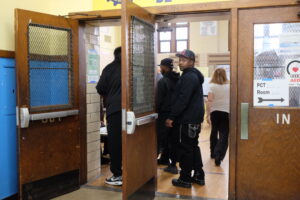
Financial concerns spread beyond voters in Detroit, with voters in D.C. expressing similar concerns and raising questions about parking, housing, development, and who can afford to remain in the city’s changing neighborhoods.
Taytum Wymer, an H Street community member, said rising housing costs and redevelopment have contributed to economic divisions between longtime residents and wealthier newcomers.
He described a neighborhood where household incomes can differ dramatically within just a few blocks, with some areas attracting increasingly expensive residential development while others continue to experience economic hardship.
Wymer said that new development intended to attract higher-income residents and businesses in the area is starting to “price out more and more residents.”
Describing the ways his community is seeing economic inequality, Wymer said this is especially visible when he buys groceries now.
“I feel like I’m entering TSA whenever I go into any grocery store,” he said, referring to heightened security measures when entering grocery stores in his community.
For Noma resident Lorena Ayala, a retail worker, the rising cost of everyday life extends beyond groceries and housing.
Even the cost of commuting by car and parking in the District has become another financial burden for her.
“There’s no free parking on the street,” Ayala said. “And if you get a ticket, it’s an outrageous amount.”
Ayala said she has struggled to keep up with grocery and gas prices but believes the financial burden of commuting by car in Washington deserves more attention, particularly as parking fees and tickets add to the cost of getting to work.
Despite the economic battles, voters are hopeful that the desire for change is reflected in voter turnout this year. Many expressed surprise at the political engagement they’ve seen from their communities this year and hope that the turnout will result in financial relief in the near future.
“This is the longest I’ve seen the line here in years,” said Holland. “I think they’re taking it more serious than the presidential election.”
 Alyssa Summers
 Isabella Barias
 Nia Ames
 Celeste Hoytt
 Ashayla Byrd
 Birchard Allen


Add comment