
 Albina Yeromina
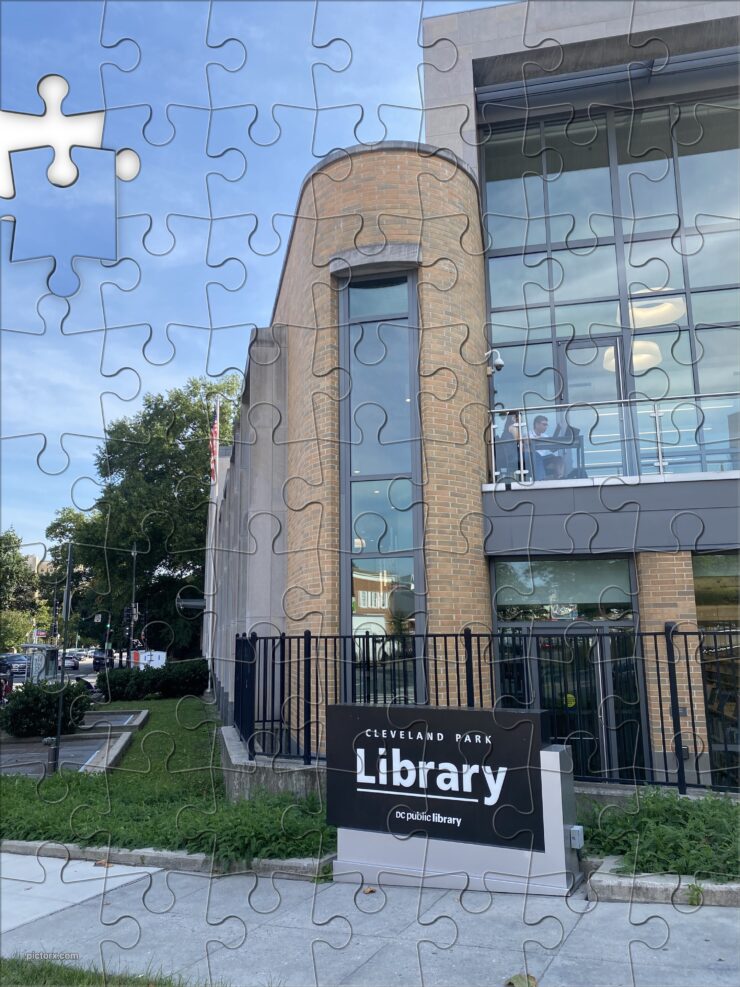
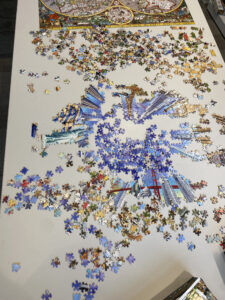
Dee Thee sat at a table in the Cleveland Park Library, a half-finished puzzle spread out in front of him.
He picked up one piece at a time, studied it carefully and tried to fit it in with the rest. He was in no hurry.
Dee Thee, a local resident who comes to the branch several times a week to work on puzzles, said it is a calming activity and a good chance to enjoy time alone or share the process with other visitors.
“It brings people together,” Thee said.
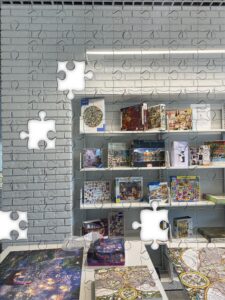
The Cleveland Park branch’s puzzle program is one of many at D.C. Public Library branches.
The program was the idea of Amanda Epperson, adult services librarian at Cleveland Park Library. A big puzzle fan, Epperson started a puzzle swap with colleagues from D.C. libraries.
The swap now is held every three months and is open to all ages.
“I’ve had people tell me that they look forward to the puzzle swap every three months. It’s their favorite one. They love coming to this library specifically,” Epperson said.
Interest in puzzles has grown rapidly since then, and the library later launched Puzzle Mania, a speed puzzle competition.
Craig Ranallo, branch manager at Cleveland Park Library, said Puzzle Mania has run twice, about a year apart, and the most common feedback was, “can you do it more often?” Epperson is trying to do it quarterly now.
The library will next host Puzzle Mania on Oct. 17.
George Williams, media relations manager for the D.C. Public Library, said the puzzle program is one of the most important programs the library provides and that DCPL partners with organizations such as D.C. Puzzle Swap.
“In 2023, the library system logged millions of visits across its diverse service offerings. In 2024, the Discover Summer initiative engaged over 67,000 participants through more than 2,500 hosted events,” Williams wrote in an email.
Several D.C. libraries also offer puzzle programs, including Takoma Park Neighborhood Library, Southwest Library, Georgetown Library, Shepherd Park and the Martin Luther King Jr. Memorial Library, where residents can participate in puzzle swaps and take puzzles home for as long as they want. DCPL also offers many other programs that are free to use.
“Library programming encompasses traditional offerings—such as story times, book clubs, and author talks—alongside concerts, exhibitions, film screenings, arts and crafts, gaming, chess, STEM workshops, maker/DIY sessions, writing programs, technology instruction, civic engagement forums, personal archiving, health clinics, and legal resources,” Williams wrote.
Epperson said programs like these are especially important for people who can’t access such activities on their own.
“All of these different types of projects that maybe people have been interested in but you just don’t have the time or the money specifically or the space, we are very happy to provide it,” Epperson said.
The priority of such programs is to bring people closer together and to broaden the traditional view of the library as a place for reading, making it a place to socialize and have fun, Ranello said.
“Public libraries these days are community centers and community spaces. And one of our big goals is to give people a place to commute together,” Ranallo said.
The programs can also help some people through hard times.
“It bridges a little bit of that loneliness that we are all experiencing,” Epperson said.
Ravensburger, a German company that makes jigsaw puzzles, sponsors the Puzzle Mania competition.
In 2026, DCPL and D.C. Puzzle Swap organized the D.C. Summer Puzzle Challenge. A 40,320-piece Ravensburger Disney puzzle was distributed across 10 locations in D.C.
“Each site completed a dedicated section, which were ultimately assembled into a single 23-foot display at the MLK Library alongside a central puzzle swap,” Willams said.
Other upcoming events include Coffee & Crosswords on Oct. 14 & 28 and a special Fungi Frolic on Oct. 29. “You never know what’s going on at the library,” Ranallo said. “I feel like you might be surprised, so the only way you can find out is to come check it out.”

 Hiba Alkhersam
 Isabella Barias
 Deona Easterson


Add comment