
 Luisa Clausen
D.C. resident Karen Whitesell spent her birthday browsing booths at the National Museum of the
American Indian’s Native Art Market, but one stood out: Llapan Maki.
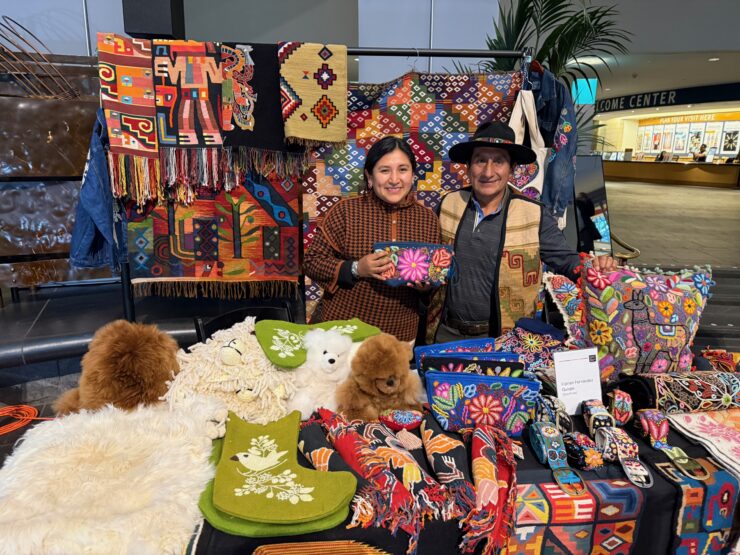
The family owned textile company traveled from Peru after receiving an invitation to participate in the market this past weekend where 30 Indigenous artists from across the Western Hemisphere featured their work at the Smithsonian’s annual market.
Whitesell, who’s been going to the museum since it opened in 2004, said she expected strong craftsmanship and storytelling from vendors and the event succeeded her expectations.
“We should support this community and the artists who have traveled all this way,” Whitesell said. “The quality of work is truly fabulous.”
For Marilu Fernandez, general manager of Llapan Maki, receiving an invitation to the market marked a milestone. She said she grew up in Peru watching her father, Ciprian Herminio Fernandez Quispe, founder of Llapan Maki, weave textiles rooted in Quechuan traditions using patterns holding cultural meaning.
In 2020, Fernandez said her family decided to sell their products to “help our community in Peru.” With that goal in mind, Fernandez applied to the Smithsonian market. Vendors must submit their portfolios to the museum prior to being considered for the market. Fernandez said the process was competitive and extensive, but said it was worth it.
For the family, Fernandez said, their first appearance in D.C. was not only about selling goods but about sharing their culture with people far from home.
“I will go back to Peru with more energy and inspiration,” Fernandez said. “It’s important that people appreciate our work.”
For vendors like Tonya June Rafael, the market has become a tradition.
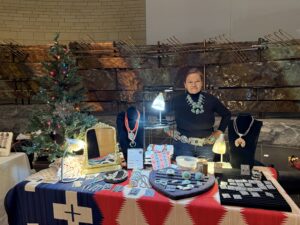
Rafael, a jewelry designer and a Navajo from New Mexico, has displayed her work at the market since the event started in 2012. Rafael said she returns each year to reconnect with vendors, exchange techniques and meet visitors who often become repeat customers.
This year wasn’t different. With 10 minutes left of the market to spare, Rafael worked on polishing some more jewelry as customers lingered with curiosity, asking for her contact and backstory on her work.
“Coming here is like seeing art shows everywhere,” Rafael said. “People come and take the time to talk to the artist, to get to know them. It’s about supporting local businesses and local artists.”
Rafael was raised in Gallup, New Mexico, by grandparents who were silversmiths and grew up around jewelry making. She said she began refining her own skills shortly after high school while working in a manufacturing shop.
Since the early 2000s, Rafael said she has sold jewelry full time at art shows across the country.
Although each place is “unique in its own way,” Rafael said there is something different about doing it in D.C.
“It’s like ‘Wow, you’re in the Smithsonian,’ and I’m honored to be here,” Rafael said. “All artists here are top well-known artists. D.C. is special, not like any other show.”
One of those artists, beadworker Naomi Smith, sat in the booth next to Rafael’s
Although the two had crossed paths in previous years, Smith said sitting next to Rafael is an opportunity to learn from fellow artists.
Smith, who is from the Chippewas of Nawash First Nation, has over 40 years of experience in her craft. Her work is a fusion between Woodland and Haudenosaunee beading techniques. She said she doesn’t apply to the market just because she wants to sell products.
“Beading for us is medicine, it’s healing, ” Smith said. “If it happens to find a home then that’s fine. But the have personal stories attached.”

 Wash staff


Add comment