
 Terrance Williams
This fall, 120 students from four area high schools received driver education through a pilot program sponsored by the District Highway Safety Office, the Department of Transportation, Vision Zero, and the Dexterity Driving School.
Now complete, the Highway Safety Office is hoping to expand the pilot driver education program for the future. Evaluations are still ongoing, but so far, the response is promising.
Jules Kontchou, one of the driving instructors for the course, praised the program, the students, and the curriculum.
“Going through the course, as a teacher, I never had a teaching document like that one,” he said.
According to Kontchou, the curriculum, designed by AAA for the course, was a great benefit to students and instructors.
“Students told me after class that they were using the skills they learned in class on the road immediately,” he said.
Kontchou also said that other instructors were impressed with the curriculum as well.

“All of the students want the program to continue for others, and they want it to be longer,” Kontchou said. “If I could convince the government to keep the program going, I definitely would.”
According to the Department of Transportation, the program focused on a few main goals, the first of which included increasing the number of students who can obtain a driver’s license safely and affordably.
“In D.C., we have a unique transportation environment, and navigating our multi-modal city safely requires awareness and respect for everyone using our streets,” said Mayor Bowser at the launch of the initiative. “This program will give our young people the skills to become confident, responsible drivers who keep themselves and their community members safe.”
According to a press release from the mayor’s office, data shows that traffic fatalities in D.C. are at a 12-year low. As of August, the data showed a decrease of 57% in traffic fatalities compared to the same time in 2024.
“Safety is at the core of everything we do at DDOT, and it is imperative that we work together as a community to help keep every traveler on our roads safe,” DDOT Director Sharon Kershbaum said in a press release. “This progress shows the impact of smart engineering and strategic road improvements and reinforces why we must continue building on this momentum.”
Now that the program has ended, the Highway Safety Office is in the post-pilot phase and working on evaluating its success. HSO is determining the feasibility of continuing the program and its funding options to do so.
Initial results are promising: 90% of students reported learning behaviors that will keep them safer on roadways through a survey provided at the end of the six-week pilot, DDOT said.
“Traffic safety education is critical to continuing our progress in reducing roadway injuries and fatalities in DC,” Acting Director of the Highway Safety Office Melissa Shear said via email. “This pilot program will empower young drivers with the knowledge and skills necessary to navigate our roads safely.”
The pilot was paid for with local funds from the Office of Vision Zero whose goal is to eliminate traffic fatalities in D.C. by 2030. The $70,000 cost of the pilot covered instructor training, course materials for students and instructors and instruction fees at no cost to students.
The partnership brought together D.C. Public Schools, Dexterity Driving School, the D.C. Highway Safety Office, and Vision Zero. The driving school provided certified instructors who followed data-informed AAA curriculum to deliver in-person training, and HSO offered strategic oversight, funding support, and alignment with the city’s broader traffic safety goals.
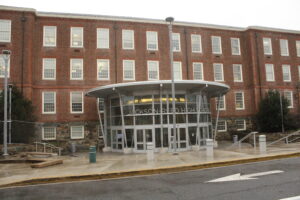
DCPS was able to integrate driver education into the student experience, ensuring equity and access for young learners.
According to DDOT, the four high schools, Jackson-Reed, Coolidge, Phelps, and Eastern all have robust Career and Technical Education (CTE) programs, which allows students to benefit from a driver’s license to remain competitive in their field of study post-graduation.
Students were selected in consultation with school counselors, with preference given to those currently enrolled in CTE courses, such as automotive technology, where driving knowledge may support future career paths, the department said.
Even before final evaluations are done, DDOT has already seen measurable impacts from the pilot. According to the department, early successes include students gaining classroom knowledge of D.C. roadway laws and safety behaviors, and families benefiting from no costs and streamlined access to training.
 Wash staff


Add comment