
 Ellen Tannor
Borne of a planning effort to modernize and shape transit in Washington, low ridership and budget cuts are just some of the reasons for the DC Streetcar premature demise.
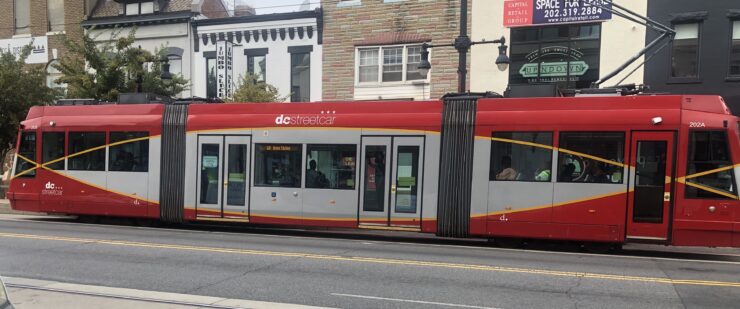
Once hailed as the future of the District’s transit, the DC Streetcar will terminate its service on March 31, 2026, with reduced service starting in Jan 2026.
Recognized for helping revive the H Street corridor in Ward 6, its shutdown leaves a leading cultural institution—Atlas Performing Arts—reflecting on its legacy of promise and public investment.
Romance meets reality
In 2002, Metro developed a $12 billion, 10-year budget that included the streetcar, but funding shortages with state and local partners caused the District to shoulder more of the burden than it bargained for, stalling the project.

The DC Streetcar officially launched in 2016 after a series of delays, including a 2015 fire.
Framed as the equitable vision of D.C. transport, 37 miles of modern transit starting in Anacostia would help underserved communities and spur urban revitalization. But, despite its noble vision, the streetcar began and ended with a single 2.2-mile line that primarily served the H Street corridor.
Budget cuts, restricted coverage, low ridership and new leadership are where romance met reality.
The D.C. Department of Transportation (DDOT) framed the streetcar termination as a budgetary and ridership issue. According to a DDOT spokesperson, “The mayor’s budget had funded the streetcar through July 2027, when the current contract was set to expire. But Council reduced that funding, forcing the District to exit the contract earlier than planned.”
However, WMATA (commonly referred to as Metro) has emphasized that the corridor still has transit service. Metro officials noted that the long-running D20 bus already covers the streetcar route—resulting in no lapse in service.
“It’s our fourth busiest route,” Metro officials explained, underscoring that public transit along the H Street corridor remains active.
“The bus runs 24 hours a day and busses arrive every 12-minutes, so it’s a frequent service.”
Despite this assurance, not everyone agrees.
“Any removal of access to this corridor is going to adversely impact businesses,” said Jarrod Bennet, executive director of Atlas Performing Arts, a cultural anchor, located in the heart of H Street.
A cautionary tale on H Street
Bennett said Atlas brings an estimated 30,000 to 45,000 people a year to H Street. However, he didn’t know the service was ending until it was publicly announced.
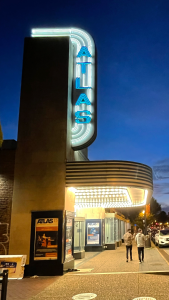
Bennett said he regularly tells Atlas patrons to jump on the streetcar from Union Station or the Mall as the best route to the theater.
“Removal of access to this corridor is just one more roadblock for people to patronize businesses on H Street,” Bennett said.
The end of service is not just inconvenient, but it completely blocks off H Street from Metro access, Bennett said. He said it will discourage people, not just from patronizing Atlas, but from all the businesses and restaurants on the street.
What’s more, Bennett said it further alienates those with mobility issues or can’t afford to take a rideshare.
Bennett said he’s been pondering what to tell patrons who come to his theater. Atlas books shows a year in advance and rents the venue to outside performers, and he said that one of the first questions renters ask is, ‘’How to get to the theater?’’
With the lack of parking, not having access to the streetcar is going to make things extremely difficult for Atlas, Bennett said.
Metro officials said that the D20 bus stops every few blocks along H Street, including near Union Station.
“Folks are welcome to ride that [D20]—it serves the same street and corridor,” said Metro officials.
According to Bennett, Atlas draws the largest number of people to H Street, and he is unconvinced that a bus option alone will suffice for the loss.
“A lot of our people come to see performances in a ballgown, I don’t think they are going to get on a city bus and ride to a gala,” Bennett said.
In addition, Bennet said he partners with BroadFutures, a nonprofit organization that provides paid internships for neurodivergent people. The program helps students gain real-world work experience and fosters independence, including how to commute on their own.
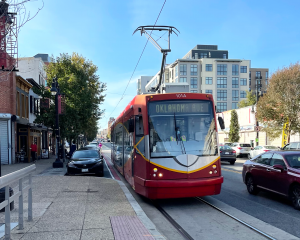
“The streetcar has played a critical role in enabling these interns to travel safely and independently—the end of the service is a concern for our program,” Bennett said.
A stress test on transit dreams.
DDOT said in a press release that it is coordinating with Metro to provide alternatives for current riders throughout the H Street corridor. Metro officials highlight the newly launched Better Bus Partner program—the first comprehensive redesign of the bus in 50 years.
“The bus is the backbone of transportation,” and the redesign demonstrates the transit agency’s commitment to modernization, Metro officials have said.
DDOT is conducting a corridor evaluation for the H Street/Benning Road corridor to determine the most effective and appropriate transportation options for this area.
Conversely, DDOT admits it has not conducted a formal evaluation of the streetcar’s economic or development impact. The agency points to research in other cities showing that streetcar systems can influence development patterns and neighborhood character, but stresses that outcomes vary widely.
There’s been a lot of growth along H Street since the pandemic, Bennett said with approximately 22 new businesses opening in 2024.
Bennett said, “I’m hoping and praying it does not impact restaurants, mom and pop shops and change the vibe.”

 Wash staff


Add comment