
 Jacob Saucier
Visitors at the newly reopened Carter G. Woodson Home National Historic Site in Shaw can once again walk through the rooms where the historian wrote books, published research, and laid the foundation for Black History Month a century ago.
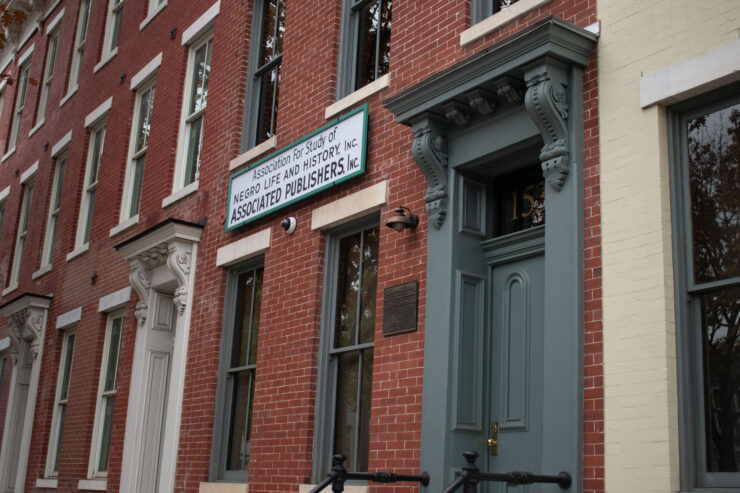
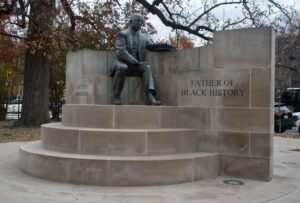
The three-story rowhouse at 1538 9th Street NW reopened Nov. 7 following years of renovations by the National Park Service, bringing visitors back into the former residence and workplace of the man widely known as the “Father of Black History.”
Woodson was the second African American to earn a doctorate from Harvard, and the first and only child of enslaved parents to earn a doctorate, according to the exhibits.
The reopening coincides with the 100th anniversary year of Negro History Week, which Woodson established in 1926 and which later evolved into Black History Month.
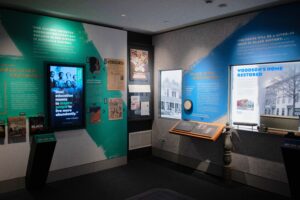
The renovations included structural repairs, the preservation of historic architectural features, and the purchase of connected units for new exhibits exploring Woodson’s life and work.
On free tours, visitors can explore the rooms where Woodson and his employees researched, wrote, and distributed publications across the country.
Tours occur regularly at set times Tuesday through Saturday and can be reserved for $1 on the NPS website.
Visitor Eric Thomas said he heard about the reopening on TikTok and found the tour illuminating.
Thomas said the house was “a bridge between now and history” that shed light on the challenges faced by earlier generations of African Americans.
Journeying back in time
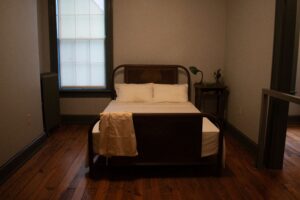
During a guided tour Saturday, NPS ranger Norvelle Jackson led visitors through Woodson’s former office, publishing rooms and private living quarters, describing his demanding work ethic and commitment to educating Americans about Black history.
Woodson spent his youth working as a coal miner before heading to high school at 20, Jackson said.
Woodson finished in just two years and went on to earn multiple degrees, eventually becoming the dean of the School of Liberal Arts at Howard University in 1919, and then dean of West Virginia State University in 1920, according to the exhibits.
Woodson purchased the property on 9th Street NW in 1922, using it as both his residence and the headquarters of the Association for the Study of Negro Life and History, which he cofounded in 1915.
The organization, now known as the Association for the Study of African American Life and History, works to preserve, research, and promote public understanding of Black history and its role in American society.
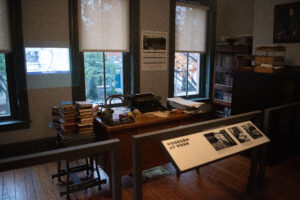
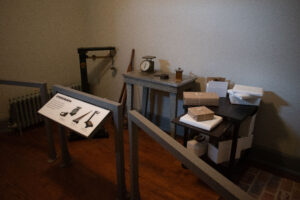
Jackson said the house was once filled with desks, books, and employees preparing shipments of historical publications. Woodson’s publishing operation was essential to his efforts to bring Black history into classrooms and homes nationwide.
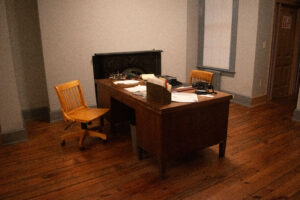
The tour included replica furnishings and a recreation of his workspace to help visitors imagine the building during its years as a center of African American scholarship in the District’s Black Harlem.
Although some original features remain, including portions of the wooden floors, much of the home’s original furniture is no longer present.
The association sold many of the building’s belongings following Woodson’s death in 1950 to help maintain the property, Jackson said.
One glaring absence is Woodson’s collection of books, which used to adorn the walls from floor to ceiling.
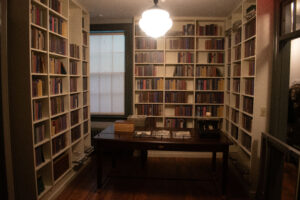
Jackson said he was hopeful that some of those items might eventually return.
Visitor Kyera Spriggs praised the exhibits but noted the lack of original décor and possessions.
“I do hope so that they get to get more of his original furniture and belongings back just to fill in the house a bit more,” Spriggs said.
For Timothy Richardson, a digital creator and author of The ABCs of Black Genealogy, visiting the restored house reinforced his own passion for documenting Black history.
Richardson said he was particularly inspired by Woodson’s emphasis on documenting family histories, a field Richardson believes is often overlooked.
“It was an incredible experience, especially to see where he took his last breath here and it was really nice to know that he was stern, but he came from a good place,” Richardson said.
Years of preservation
Preserving the historic home has been a decades long undertaking.
The Carter G. Woodson House was designated a National Historic Landmark in 1976, according to a plaque on the building’s exterior.
Congress authorized the National Park Service to acquire the property in 2003 with staunch backing from Del. Eleanor Holmes Norton, D-D.C., who is retiring in January.
The agency purchased it from the association for $465,000 in 2005, according to the NPS website.
The home underwent restoration in phases, with limited public tours offered after the competition of the first phase in early 2017, according to a 2017 paper by historian Pero Gaglo Dagbovie, who developed the site’s historic narrative.
According to an NPS press release, the renovations cost $14.2 million.
For a National Park Service employee who joined the agency this summer, the reopening offers an opportunity to introduce Woodson’s legacy to visitors who may recognize the accomplishments but not the man.
“I think he’s someone that not many people know his name, but you know his work, you know Black History Month, you know people that he trained, you know people that he fought for,” said the employee, who was not authorized to speak with the media.
“There were always whispers of the Woodson House,” the employee said, “for so long it was sitting, not getting enough attention.”
“I think giving him a platform finally after all these years is really important,” they said.
The reopening follows another major restoration of an African American historical institution in Shaw.
The African American Civil War Memorial Museum reopened Sept. 30 inside the renovated Grimke School building on Vermont Avenue NW, bringing expanded exhibits and additional artifacts documenting the contributions of Black Union soldiers.


 Hiba Alkhersam
 Albina Yeromina
 Nia Ames
 Isabella Barias


Add comment